Central Papua, Timika — In the highlands of Papua, mountains are not just part of the landscape; they are part of everyday life. For generations, young Papuans have grown up navigating steep trails, unpredictable weather, and remote terrain. Today, these lived experiences are increasingly being transformed into something more structured and sustainable: professional mountaineering training.
Across Papua’s mountainous regions, initiatives led by local organizations, climbing associations, and community leaders are demonstrating how adventure can function as a pathway to education, economic opportunity, and leadership development for local youth.
From Traditional Knowledge to Professional Skills
Many Papuan youths possess an intuitive understanding of the mountains—how to read the weather, move safely on rugged terrain, and survive in remote environments. However, without formal training, this knowledge often remains informal and undervalued.
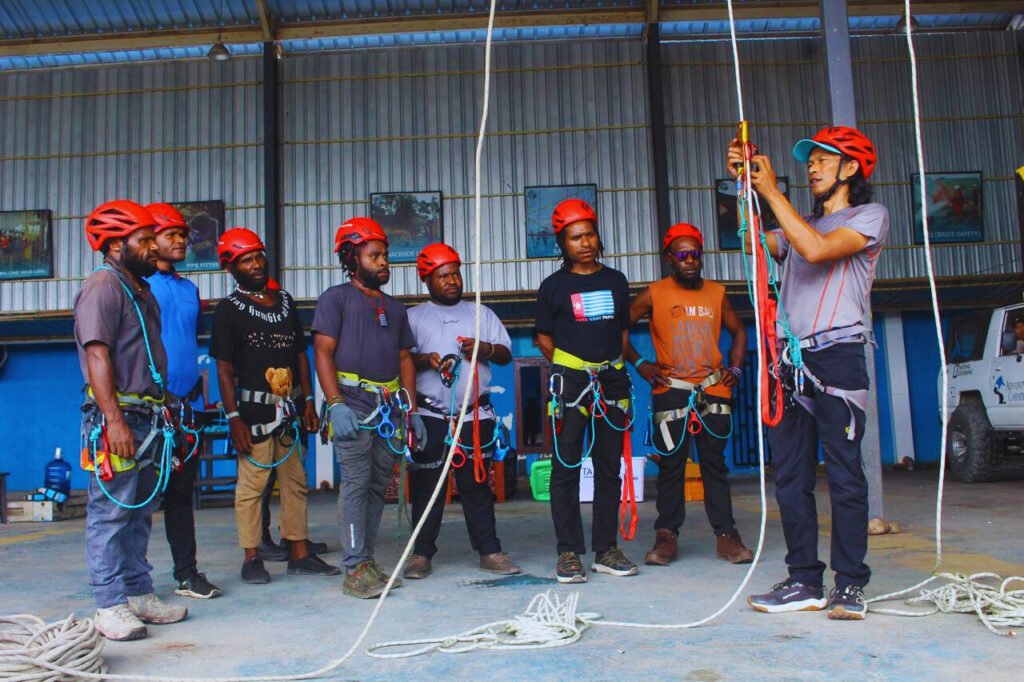
Mountaineering programs aim to bridge this gap by combining traditional ecological knowledge with modern technical skills, such as rope systems, rescue techniques, navigation, risk management, and first aid. The goal is not to replace local wisdom, but to strengthen it with internationally recognized safety standards.
This structured approach allows young climbers to transition from informal helpers into certified guides, porters, rescue personnel, and expedition leaders.
Adventure as an Educational Platform
For many participants, mountaineering training serves as an alternative classroom—one rooted in discipline, responsibility, and teamwork. Learning to manage equipment, assess risk, and make decisions in high-pressure environments builds practical intelligence that extends far beyond the mountains.
Training programs often emphasize:
- leadership and communication
- environmental ethics and conservation
- self-confidence and mental resilience
- problem-solving under extreme conditions
In regions where access to formal education can be limited, adventure-based training offers a powerful model of experiential learning—education that is hands-on, relevant, and deeply connected to local realities.
Creating Sustainable Livelihoods in Remote Areas
Professional mountaineering creates tangible economic opportunities. Certified local guides and support teams play a critical role in expeditions, research projects, and adventure tourism. Their involvement not only improves safety for visitors, but also ensures that economic benefits circulate within local communities.
For many families, income from guiding, logistics, and mountain support work helps fund education, healthcare, and community needs. More importantly, it provides an alternative to extractive or short-term employment, offering a livelihood built on skill, responsibility, and stewardship of the land.
Shaping a New Generation of Local Leaders
Beyond technical competence, mountaineering training fosters leadership rooted in accountability and service. Young climbers trained to manage risk, protect teams, and respect cultural boundaries often emerge as role models within their communities.
These individuals become more than guides; they act as:
- mentors for younger generations
- advocates for environmental protection
- cultural bridges between local communities and international visitors
In this way, the mountains become a training ground not only for climbers, but for community leaders capable of navigating both local traditions and global expectations.
A Future Built from the Highlands
As interest in adventure tourism and outdoor education grows, the role of locally trained mountaineers becomes increasingly vital. Investing in youth training is not simply about creating jobs—it is about recognizing local expertise, strengthening community resilience, and ensuring that Papua’s mountains are explored with respect and responsibility.
In the highlands, where challenges are constant and margins for error are small, adventure is more than a pursuit. When structured with care and vision, it becomes a powerful tool for education, livelihood, and leadership—shaping futures as enduring as the mountains themselves. (PMA)
