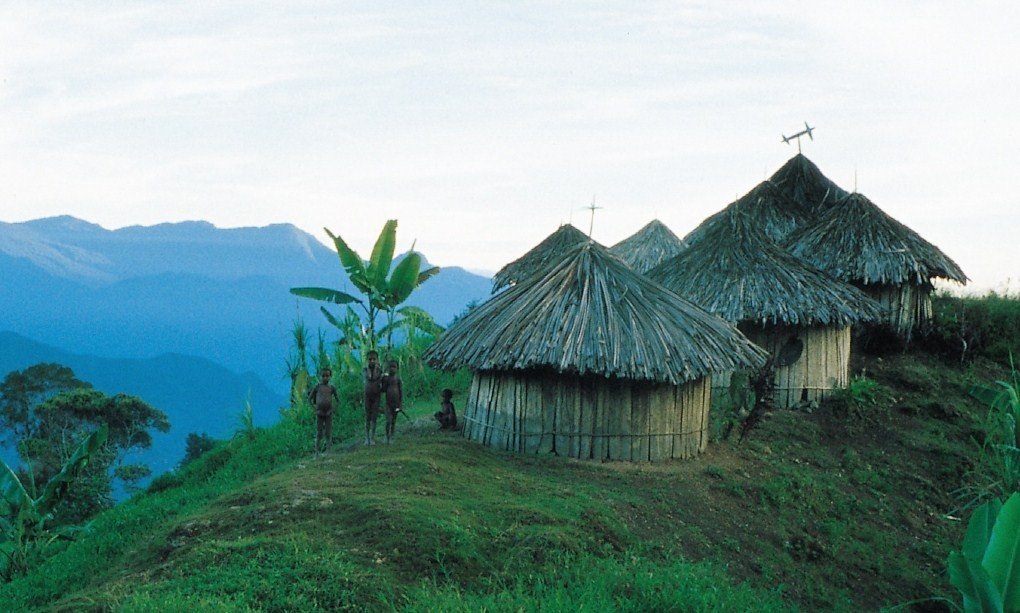
Papua’s cultural richness is reflected in the diversity of its indigenous tribes, especially those living in the Central Highlands. In this final part, we highlight the Yali, Nduga, Damal, and Mee tribes, whose traditions, livelihoods, and belief systems continue to shape Papua’s identity today.
The Yali Tribe
The Yali Tribe is administratively located in Yahukimo Regency and Yalimo Regency, both of which were formed through regional expansion from Jayawijaya Regency. The name Yahukimo is derived from four major tribes living in the area: Yali, Hubla, Kimyal, and Momuna, while Yalimo comes directly from the Yali people themselves.
The Yali inhabit the eastern part of Papua’s Central Highlands. In Yahukimo, many other tribes coexist, including Una Ukam, Mek, Ngalik, Tokuni, Obini, Korowai, Duwe, Obukain, Kopkaka, and Bese. In Yalimo Regency, approximately 94 percent of the population belongs to the Yali tribe.
Like many highland communities, the Yali are traditional farmers. They cultivate sweet potatoes (suburu), taro (hom), and hunt for food. Their staple diet includes sweet potatoes, taro, red fruit, wild coconut, and seasonal forest products.
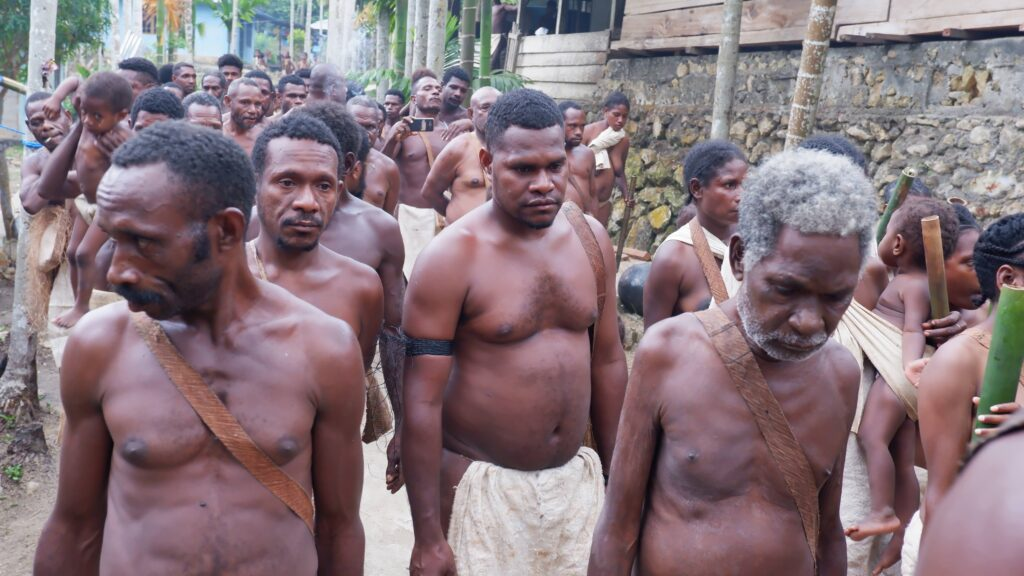
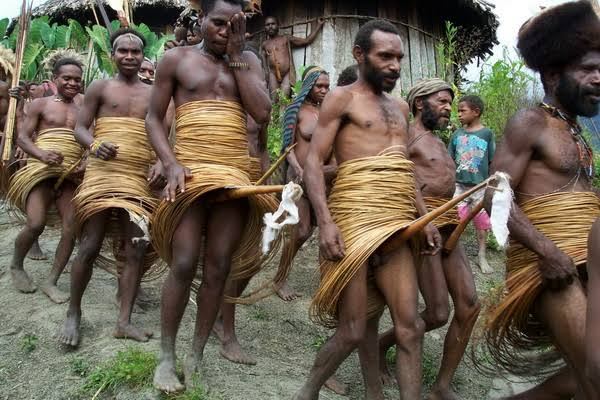
The Yali are known for their distinctive traditional attire and ornaments, including shells, bird feathers, pig tusks, and other natural materials. Their koteka is worn differently compared to other highland tribes. It is longer, positioned more horizontally and straight forward, and often combined with rattan bindings across the chest.
Before the arrival of Christianity, the Yali followed animist belief systems. Today, after the introduction of the Gospel, around 99 percent of the Yali population practices Protestant Christianity.
The Nduga Tribe
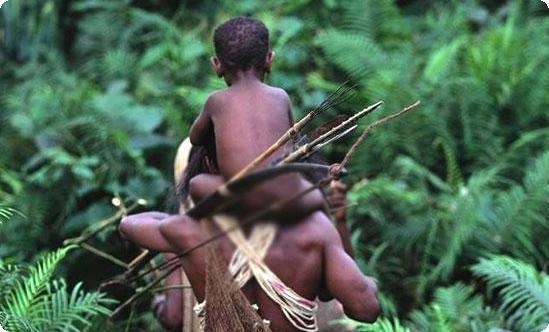
The Nduga Tribe lives in the southern part of the Central Highlands and is now administratively part of Nduga Regency, with Tiom as its capital. The Nduga primarily farm sweet potatoes and taro, and raise pigs as an important part of their livelihood.
There are linguistic similarities between the Nduga language and those of neighboring tribes such as Nayak, Lani, and Yali. Certain words share similar meanings, reflecting historical and cultural connections among these highland communities.
The Nduga believe their ancestors originated from Seinma, a village in the Kurima area. Their communities are grouped based on climate zones: hot areas such as Mapnduma, transitional areas like Mbua, and colder regions such as Yigi.
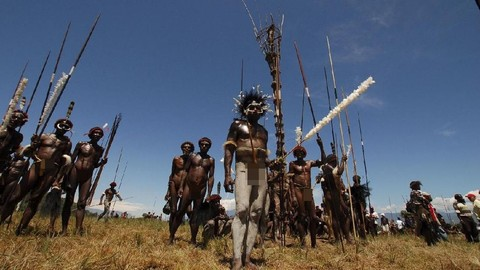
Each Nduga group maintains its own gardens, hunting areas, and pandan lands. Men traditionally live in separate men’s houses. Kinship is based on blood relations, while alliances are formed for cooperation, especially during conflicts.
Nduga society is divided into two social groups, or moieties: Wandikbo and Gwijangge. Marriage is allowed only between members of different moieties, reinforcing social balance and alliances within the community.
The Damal Tribe
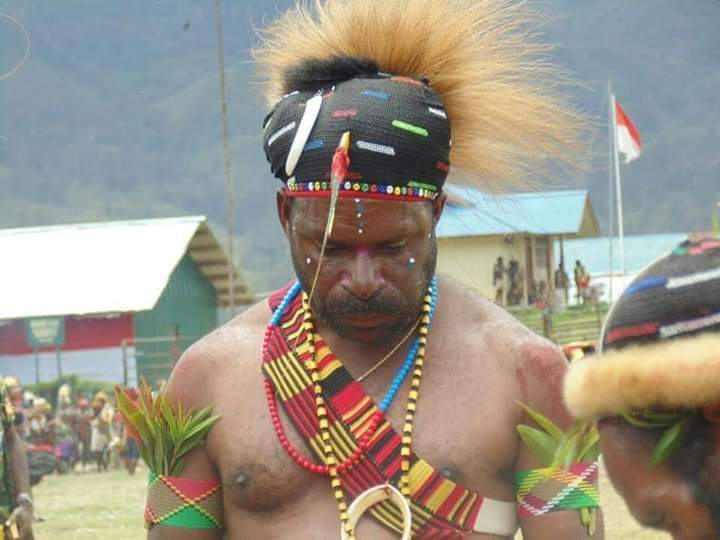
The Damal Tribe is one of the indigenous groups living in Papua’s mountainous regions. They refer to themselves as Damalme, derived from “me” meaning “human,” which can be translated as “the Damal people.”
Historically, the Damal were skilled in using fire for cooking long before outside contact. Fire was traditionally made using a method called Hagan, which involved friction between dry wood and rattan until heat and sparks were produced.
The Damal were first recorded by Dutch explorers J.V. de Bruyn and his team, who approached the community from the Wissel Lakes area. Earlier contact also occurred through British expeditions led by Wollaston, followed by the 1936 Carstensz Expedition under Dr. Colijn.
These early encounters placed the Damal people within the historical narrative of exploration in the Carstensz and Central Highlands region.
The Mee Tribe
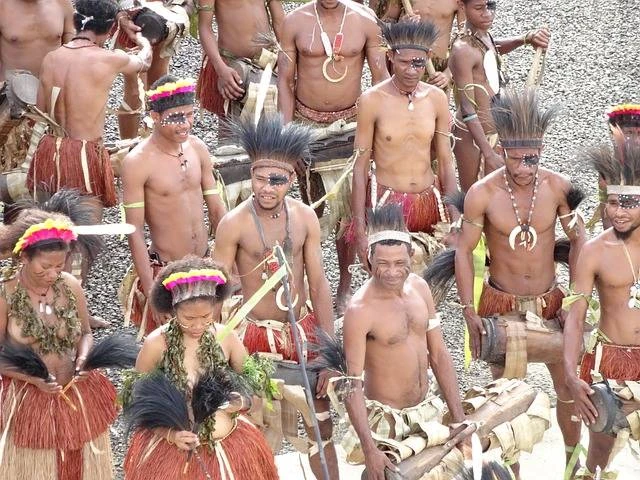
The Mee Tribe inhabits the western part of Papua’s Central Highlands. Their traditional territory includes areas around Lake Paniai, Lake Tage, Lake Tigi, the Dogiyai Valley, and the Mapiha or Mapisa Mountains. Administratively, Mee communities are now spread across districts in Paniai Regency and Nabire Regency.
Mee culture reflects a blend of traditions found across the Central Highlands. The Mee believe that their purpose as a community is to preserve and protect their culture, rather than replace it with external influences.
In Mee society, traditions often emerge from how ancestors responded to challenges or problems. Successful solutions become symbols, rituals, or ceremonies passed down through generations. One example is the Yuwo Festival, also known as the gold celebration, which originated from a respected pig farmer from Uwamanai village. Such rituals serve as cultural markers and expressions of identity.
PMA believes that learning about indigenous cultures is essential for responsible exploration, conservation, and appreciation of Papua’s mountains and people.
