the “Experiential Tourism” of the Carstenzs Pyramid Hiking Trail
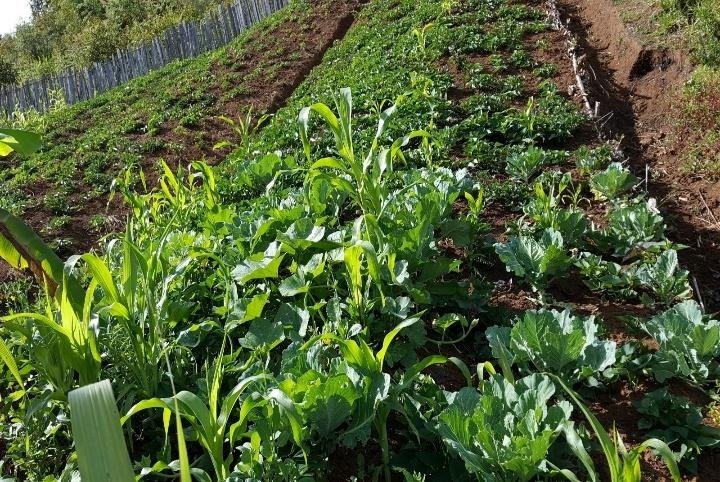
Organic Vegetable Garden in Ugimba Village, Intan Jaya Regency on the Carstenzs Pyramid Hiking Trail
Since 2005, this world-renowned mountain peak has been intensively promoted as a prime natural tourism destination for extreme climbing in Indonesia. This initiative is facilitated by the Papua Mountaineering Association (PMA), founded and led by a native Papuan, Maximus Tipagau. He was born in a traditional village in Intan Jaya Regency, on the northern slope of Mount Carstenzs Pyramid in Central Papua Province. The community there lives within its traditional farming culture, cultivating the land and cultivating organic crops. Carstenzs Adventure, a travel agency led by Maximus Tipagau, has taken this initiative to heart. According to Maximus, this is one of the elements of the “Experience Tourism” appeal for mountain climbers. Therefore, its sustainability needs to be managed and maintained, especially by the local community. Maximus explained that this is so that tourists climbing Carstenzs Pyramid can be treated to a different experience, beyond the primary goal of reaching the highest peak in Oceania.
At a glance, “Experiential Tourism” is a form of travel that focuses on direct interaction, active involvement, and cultural understanding (immersion) at a destination, rather than simply sightseeing. Tourists seek meaningful, educational, and authentic experiences—such as gardening, cooking local food, learning traditional crafts and bow-and-arrow techniques, staying with the community for a while in a traditional house, and so on—to connect emotionally with the local community.
Community Organic Plants as a Tourist Attraction
Therefore, according to Maximus Tipagau, “The local community must be involved in this mountain climbing tourism activity. We must also support them in managing their existing traditional potential. This includes gardening, which can serve as cultural knowledge for mountain climbers. Therefore, according to Maximus, we don’t just offer the one-sided view of reaching the 4,884-meter-above-sea-level summit. We must also be able to introduce the local indigenous farming traditions as an attraction for tourists, ultimately allowing tourists to explore other aspects of community life and their environment.”
General Culture of Food Independence in the Papuan Mountain Communities
“It is known that, naturally, the traditional agricultural system in Ugimba village, Ugimba District, Intan Jaya Regency, is similar to the agricultural techniques of Papuan mountain communities in general. They cultivate the land according to cultural patterns and “planting times.” Organic food crops are cultivated through generations, or passed down through generations, by the local community. Crops such as sweet potatoes (petatas), taro (colocasia esculenta L.), pumpkin, soybeans, corn, cabbage, spinach, Arabica coffee, and various other vegetables are cultivated there. Maintaining traditional agricultural techniques, using simple hoes made from sharpened pieces of wood, the women and men work together to cultivate the soil and plant the sweet potatoes and vegetables.

An Ugimba woman from the Moni tribe, Intan Jaya Regency in her organic garden
According to Maximus, these unique features are sure to be popular with tourists, as they come from diverse cultural backgrounds and are naturally curious. Therefore, if there’s something unique about the traditions of the Indigenous Papuan (OAP) community, it should be introduced to tourists so they can experience it up close. This will foster friendly and humane social interactions between visitors and our Indigenous Papuan community, especially in the tourist trails that serve as experiential tourism destinations.
Local Tour Guides Support Carstenzs Tourism
To support the mountain climbing tourism driven by PMA and the Carstenzs Adventure travel agency, they also hold a training camp program for tour guides from the local area of Carstenzs Pyramid. This mandatory technical training includes classroom theory, physical fitness training, and rock climbing practice. Conducted in Timika City, the PMA-CA headquarters, the training is professionally designed to instill a strong understanding of safety and security aspects during mountain climbing. This serves as an important guideline for the guides who will be tasked with handling tourists climbing Carstenzs Pyramid.
In addition to routine training for the Tour Guide Crew at PMA headquarters in Timika, the main transit city to the Carstenzs destination, PMA and Carstenzs Adventure have also conducted similar training, including English language lessons, involving several indigenous Papuans in Intan Jaya Regency. “We have also trained tour guides who are knowledgeable about local wisdom and who act as spokespersons about the potential for experiential tourism within the local community and the natural environment,” explained Maximus Tipagau.

Maximus Tipagau, Porter and Tour Guide in Sugapa, Intan Jaya Regency, the ideal hiking route to Carstenz’s Pyramid
“All of this,” Maximus Tipagau added, “is part of the Corporate Social Responsibility program of PMA and Carstenzs Adventure, the travel agency. It’s also a recognized way to engage indigenous communities in recognizing the potential of their valuable resources. These values include social, cultural, humanitarian, economic, environmental, and pride-building activities through the Carstenzs Pyramid tourism activities,” Maximus said.
The Montana Climate Zone and the Life of the Ugimba Community
In this regard, let’s understand how an indigenous community of the Papuan Highlands lives and thrives in villages within a radius of just a few kilometers from the snow-capped Carstensz Pyramid. For example, in a village called Ugimba. According to landscape theory, areas like Ugimba, including Sugapa and others in Intan Jaya Regency, fall within the Montana zone.
Montana is a biogeographic term referring to a highland region with a distinctive wild forest ecosystem, characterized by trees of limited height and fertile soil within a specific ideal growing zone. Biodiversity is able to coexist harmoniously with endemic animals within its natural habitat. With an elevation of around 2000-2200 meters above sea level, the Montana region also has a cooler climate and often experiences higher rainfall than lowland areas.
Montana also has ideal growing zones for several types of food crops, also called hardiness zones or planting zones. This can help gardeners and farmers determine which crops are best suited to their location.

Ugimba-Intan Jaya Village Organic Food Farm in the Montana Landscape
So… with this, the area inhabited by the Papuan Moni people in Ugimba, Intan Jaya, is a fertile landscape zone rich in biodiversity. It is also a gift and blessing from God to this region. So, even if generations and times change, it will continue to exist as a habitat for humans and other living creatures. This includes the existence of the Carstensz Pyramid peak tourist attraction, which supports the survival of the local people.
Understanding Landscape Zones
In landscape theory, there are several zones defined as areas ranging from 0 (zero) meters above sea level (masl) to 5,000 meters above sea level, over a distance of more than 100 km in the high mountain ranges. These zones are the ocean zone, lowland zone, montane zone, sub-alpine zone, alpine zone, and nival zone. These diverse landscapes are also found on each of the World’s Highest Seven Summits, including Carstenz’s Pyramid.
And if you want to climb Carstenz’s Pyramid on foot while exploring the surrounding natural elevations, you’ll begin your trek from Ugimba/Sugapa. The winding path, which winds through dense, moist, woody-rooted forest, mossy bushes, and rocky hills, traverses cliff edges and crosses rivers to the summit of Carstenz’s Pyramid. You’ll pass through four distinct landscape zones: from an altitude of around 2,000 meters above sea level in the Montana zone, through the Sub-Alpine zone, across the Alpine zone, and finally to the Nival zone at 4,884 meters above sea level, the summit of Carstenz’s Pyramid.

Alpine zone and Nival zone 3000 masl – 4000 masl, part of the Carstenzs Pyramid climbing route
With this overview, the audience has learned about the Carstenz Pyramid landscape! The highest peak located in the Oceania-Australasia continental shelf zone and represented in the world’s seven highest peaks (World Highest Seven Summits). Geographically, it is located in the tropical region, precisely in the land of Cenderawasih/Tanah Papua, Central Papua Province. And with tropical snow within a radius of the 4884-masl peak, it is considered a wonder of the world. In terms of geographical-governmental boundaries, it is part of Mimika Regency and directly neighbors two regencies, namely Intan Jaya to the north and Puncak on the east side of Carstenz Pyramid. Another name for Carstenz Pyramid, namely Puncak Jaya, is the highest mountain in Indonesia on a national scale.

Maximus Tipagau while on the Carstenzs Pyramid climbing route
Maximus’s message at the end of this story is, “I hope this information about “Experience Tourism” is useful for those of you who love mountain tourism. And if you’re interested, you can contact “Carstenzs Adventure-Travel” to challenge nature to the highest, only tropical snow-capped mountain in Papua.” (Gasper Muabuay, Article Contributor for PMA+CA)
