The Extreme Topography of Carstensz Pyramid: Understanding Indonesia's Highest Vertical Walls
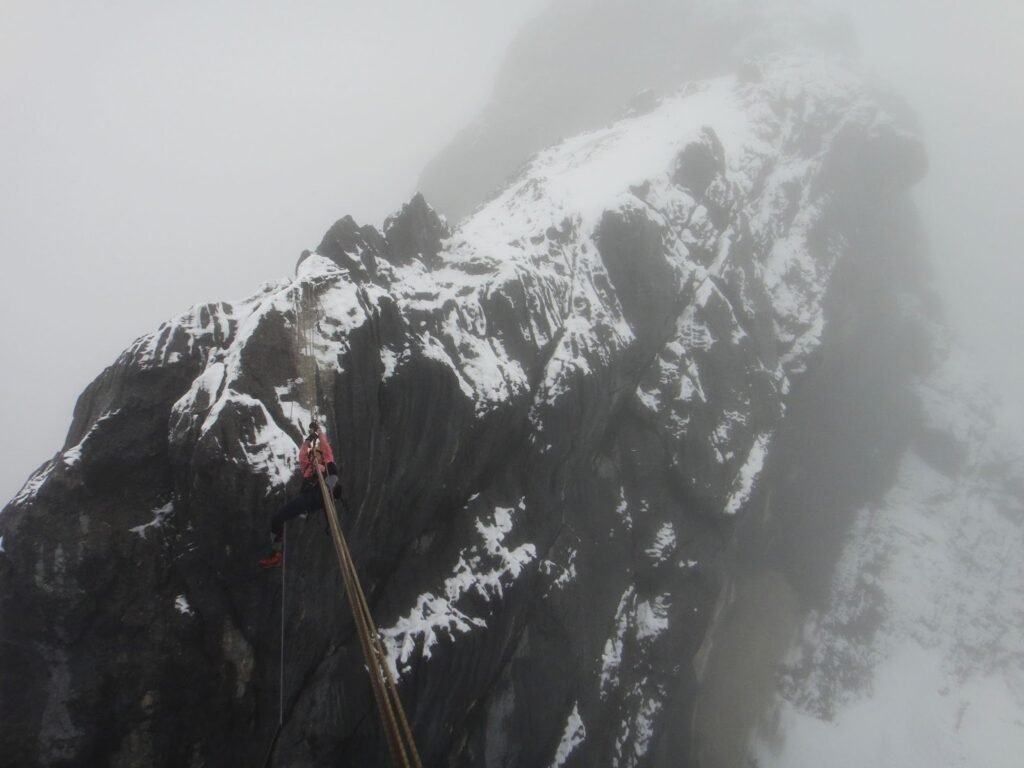
Carstensz Pyramid or Puncak Jaya rises to 4,884 meters above the sea and stands as the tallest peak in Indonesia. Located in the Sudirman Range of Central Papua, it is not only the country's highest point but also one of the tallest peaks in Indonesia. most technical and challenging climbs on the Seven Summits list. Its dramatic vertical walls, limestone cliffs, and rapidly disappearing tropical glaciers are like a next door crush who is out of your league yet still makes you want to pursue them.
Geological Formation and Topography
Carstensz Pyramid lies within the Sudirman Range, a mountain system uplifted by the collision of the Indo-Australian Plate and the Pacific Plate. This tectonic activity pushed ancient seabed limestone upward, creating the sharp ridges, vertical faces, and karst formations that now define the peak.
Unlike many high-altitude mountains composed of granite or volcanic rock, Carstensz is dominated by limestone, This composition contributes to the pyramid-like shape of the summit and the complex network of cracks and ledges that climbers must navigate. This composition contributes to the pyramid-like shape of the summit and the complex network of cracks and ledges that climbers must navigate.
Why Carstensz Is Considered “Extreme”
1. Nearly Vertical Limestone Walls
The final ascent to the summit includes 80-100 meters of near-vertical rock, requiring technical climbing skills. With difficulty ratings ranging from UIAA V to VI, The climb demands competence in rope systems, anchors, and movement on exposed limestone.
2. Technical Summit Features
Several summit routes are involved:
- Fixed ropes
- Steep rock slabs
- Narrow ledges
- Tyrolean traverses over wide gaps or crevasses
These features set Carstensz apart from other Seven Summits such as Kilimanjaro or Elbrus, which are primarily high-altitude hikes rather than technical climbs.
From Rainforest to Rock Walls: The Journey Up
Reaching the base of Carstensz is an expedition on its own. Depending on whether climbers trek or fly in, they may encounter dense tropical rainforest with humid, muddy, and unpredictable terrain. Or they can meet swampy valleys and alpine wetlands as they ascend the sharp limestone ridges. leading to the high camp. The guaranteed one is the rapidly shifting weather, including fog, heavy rain, and freezing summit temperatures.
This mix of environments makes Carstensz one of the most diverse and strenuous mountain approaches found anywhere in the world.
Tropical Glaciers: A Vanishing Phenomenon
Carstensz Pyramid is one of the very few tropical mountains that historically held permanent glaciers. For decades, the Carstensz, Meren, and Northwall Firn glaciers were defining features of the summit region. However, due to accelerated climate change, these glaciers have been shrinking dramatically. Studies and photographic comparisons reveal that the ice fields have lost the majority of their mass, and some may completely disappear within this decade.
Carstensz Pyramid stands out as a mountain of extremes with its razor-sharp limestone walls, dense jungle approaches, rapidly disappearing glaciers, and technical climbing requirements uncommon on other Seven Summits routes.
This combination of geology, climate, and terrain has earned Carstensz a reputation as one of the world's most demanding and distinctive climbs, a true test of both mountaineering skill and endurance.
