
Carstensz Mountain, also known as the Carstensz Pyramid, is the highest peak in Indonesia, standing at 4,884 meters above sea level. Located in Central Papua Province, this mountain is one of the most challenging climbing destinations in the world. Beyond its breathtaking beauty, Carstensz presents a unique challenge-not only to climbers who dare to reach its summit but also in terms of environmental preservation, which is increasingly under threat.
Despite being known for its stunning landscape and as part of the famous Seven Summits, Carstensz Pyramid is not immune to serious waste problems. Every year, thousands of climbers arrive to test their abilities on the mountain. Unfortunately, many leave their waste along the climbing trails, damaging the natural beauty that should be preserved.
The Carstensz basecamp, located in Yellow Valley, serves as a resting point for climbers before continuing to the summit. At this site, climbers often leave behind trash such as plastics, paper, cans, and other items that harm the ecosystem. This situation is alarming, as the accumulated waste threatens the flora and fauna surrounding Carstensz.

One of the greatest challenges in handling the waste problem in this area is Carstensz's extreme remoteness. Helicopters are the only effective means of transporting trash to accessible locations, but the cost is extremely high. Therefore, it is crucial for every climber and tour operator to be aware of the environmental impact of the waste they leave behind and to take responsibility for maintaining the area's cleanliness.
Cleanup Efforts by the Papua Mountaineering Association (PMA)
To tackle the waste issue on Carstensz, the Papua Mountaineering Association (PMA), consisting of both local and international climbers, carried out a series of clean-up initiatives. These actions aim not only to clean the polluted areas but also to encourage everyone involved in climbing activities to be more mindful of cleanliness and environmental preservation.
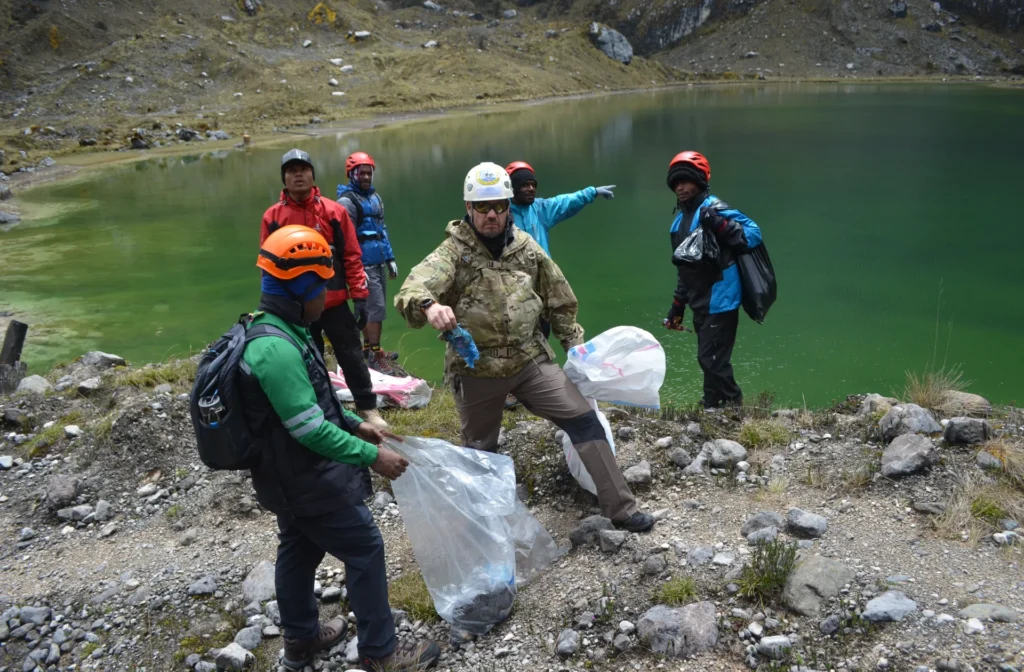
The first cleanup action began on April 22, 2018, led by Mr. Manuel Andres Pizarro, a Canadian climber concerned about environmental issues. The six-member team cleaned up waste along the trail from Balidam to Lake 2. This action marked the beginning of a sustained effort to protect Carstensz's cleanliness and preservation.
Following the success of the first cleanup, PMA conducted a second clean-up from May 2 to May 5, 2018. This time, a four-member team cleared waste from Balidam to Yellow Valley, the last stop before climbers make their final ascent to the summit. Through this effort, PMA demonstrated its commitment to keeping the climbing route and basecamp clean and preserved.
The clean-up continued from May 14 to 20, 2018. PMA returned to the field to collect trash along the route from Lake 1 to Yellow Valley, with a focus on the basecamp-often the main area where trash accumulates. During this cleanup, the team collected waste from various points, including 35 sacks from the basecamp and 75 sacks from Yellow Valley. In total, the team gathered 113 sacks of trash during the three clean-up operations.
The clean-up efforts carried out by the Papua Mountaineering Association are a form of responsibility in preserving the natural environment around Carstensz. As true mountaineers, our goal is not just to conquer the summit but to ensure the nature we enjoy remains protected, and that we return home safely to our families. Maintaining cleanliness and environmental sustainability is part of our duty as nature visitors-something we should carry home with us, along with memories and beautiful experiences.
As more and more climbers visit Carstensz, it's crucial to remember that the negative impact of waste can damage a fragile ecosystem and spoil its natural beauty. Every climber should be part of the solution, not the problem, by keeping the trail clean throughout their journey.
Carstensz Pyramid is an extraordinary tourist destination that challenges climbers from around the world. However, the sustainability of this destination heavily depends on effective environmental management. The Papua Mountaineering Association (PMA) has shown its commitment through a series of clean-up efforts. Still, long-term success in maintaining Carstensz's cleanliness and preservation can only be achieved if all stakeholders-climbers, tour operators, and local communities-work together to care for nature and take responsibility for keeping it clean.
With growing awareness and more consistent actions, Carstensz will remain not only a challenging summit for climbers but also a symbol of environmental conservation efforts to be enjoyed by future generations.(PMA)
