Carstensz Pyramid Officially Classified as a Grade V Extreme Route by the Ministry of Forestry
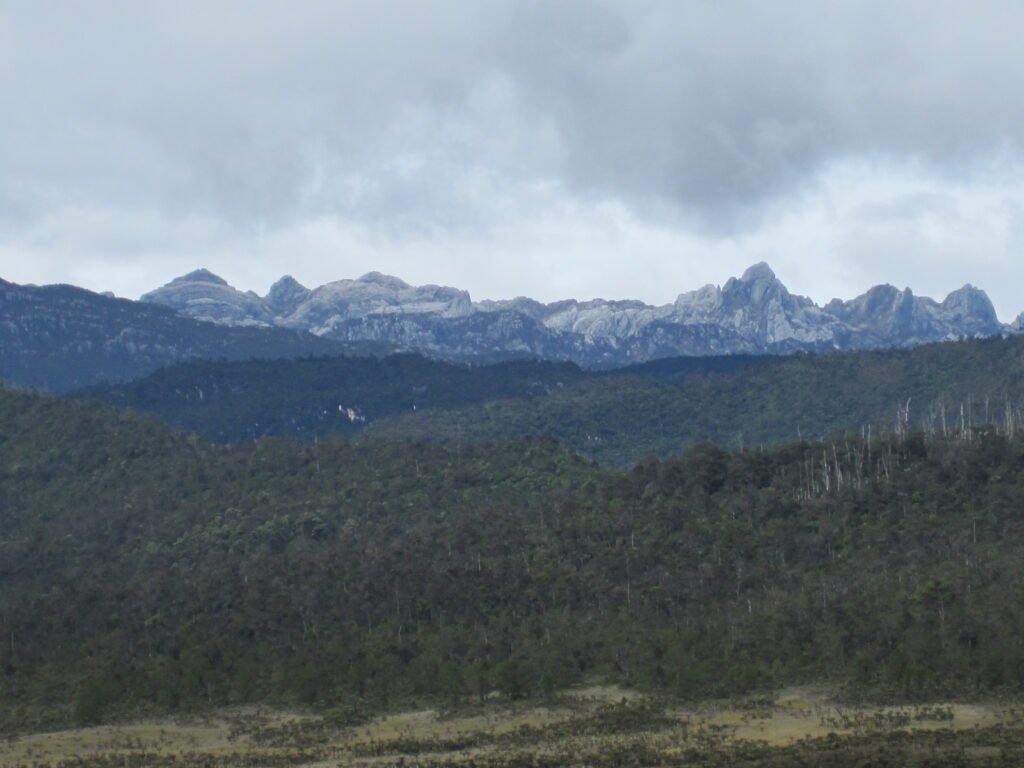
The Ministry of Environment and Forestry has officially classified the Carstensz Pyramid climbing route as Grade V, The highest difficulty category within Indonesia's national mountain grading system. This assessment places Carstensz among the most challenging and technical climbing routes in the country, reflecting its extreme terrain, severe weather patterns, and complex access logistics inside the Lorentz National Park.
This grading system was developed to provide a standardized framework for evaluating mountain routes across Indonesia. Built upon the HIRARC methodology, Hazard Identification, Risk Assessment, and Risk Control, the system considers real field conditions, the unique morphology of Indonesia's archipelagic mountains, and the distinct climate patterns of tropical high-altitude environments. Using the Indonesia Mountain Grade System application designed by the Indonesian Mountaineering Federation (FMI), assessors evaluate each route using structured indicators that minimize bias and ensure consistency. Final grades are validated through multi-stakeholder workshops involving experts, national park authorities, and technical teams.
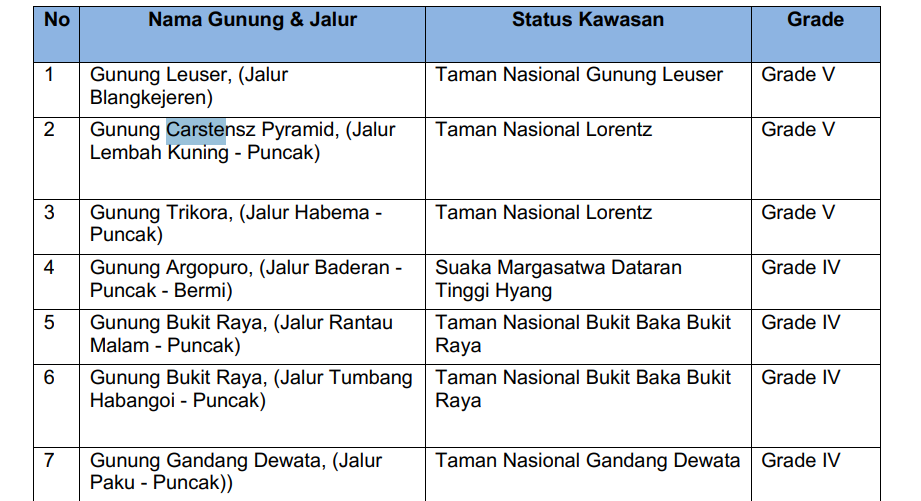
Carstensz Pyramid received a Grade V classification due to its extreme difficulty across all six evaluation dimensions. The morphology of the route features steep rock faces, vertical walls, technical scrambling, and full rock-climbing sections that demand advanced mountaineering skills. Unlike typical Indonesian mountains, Carstensz requires the use of ropes, harnesses, anchors, and other climbing equipment throughout major parts of the ascent.
Geographically, the route lies at nearly 5,000 meters above sea level with limited water sources, long trekking approaches, and minimal safe camping areas. Access to the starting point often requires chartered aircraft or multi-day approaches through remote Papuan forests, further heightening logistical challenges.
Weather conditions are another defining factor. Carstensz is known for rapid and unpredictable weather changes, sub-zero temperatures, strong winds, and frequent hailstorms above 4,000 meters. These extreme alpine conditions, uncommon in tropical regions, make the climb significantly more dangerous than most other routes in Indonesia.
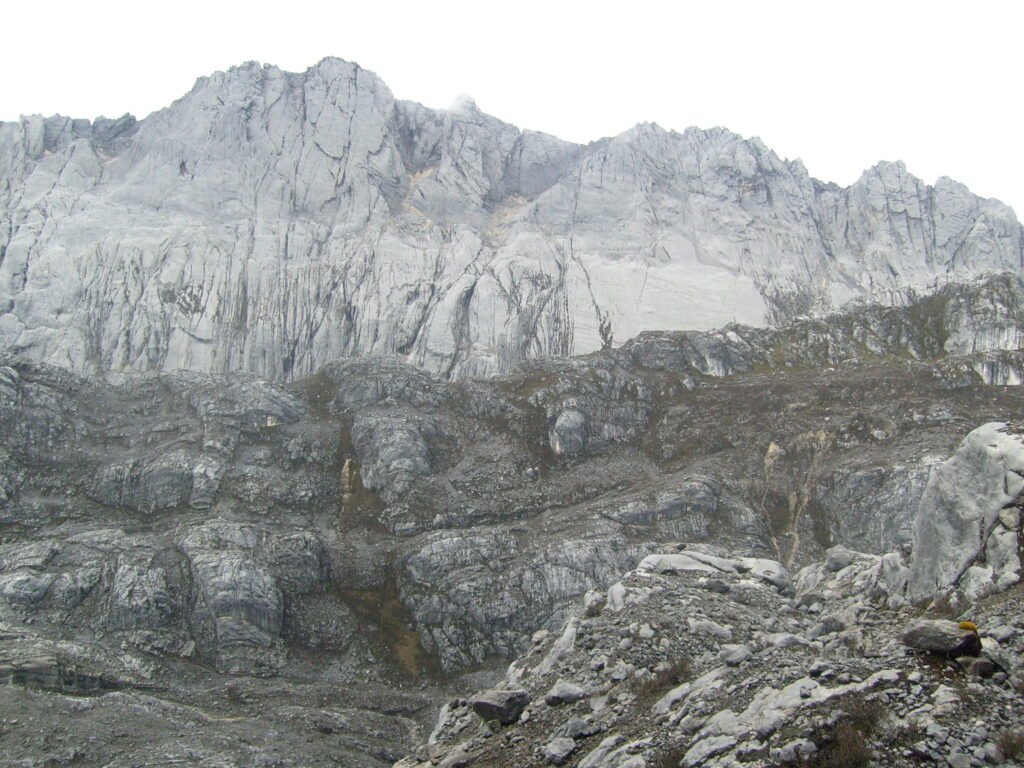
Navigation difficulty also contributes to the Grade V classification. Limited trail markers, persistent fog, rugged terrain, and complex topography mean that getting off-route is a real risk, especially for climbers without expert guidance. The remoteness of the area further enhances the difficulty of route-finding.
Emergency response capacity is particularly critical in the assessment. Carstensz is located far from medical facilities and evacuation points, with unstable communication signals and limited SAR access. Any rescue operation requires significant coordination, time, and resources, raising the inherent risk profile of the climb.
The final dimension, biological factors, includes the presence of wildlife and unique high-altitude vegetation that can pose health and safety risks. Climbers must be prepared for environmental hazards uncommon in other parts of Indonesia.
With this official Grade V classification, Carstensz Pyramid is recognized as one of Indonesia's most extreme and demanding mountain routes, comparable to international expedition standards. The grading serves as a crucial reference for national park managers, expedition operators, and climbers, ensuring that all parties understand the risks involved and uphold responsible, safe, and sustainable climbing practices in one of Indonesia's most valuable natural landscapes.
