Eastern Face of Carstensz: The Untamed Side of Papua's Highest Giant
When most climbers imagine Carstensz Pyramid, what usually comes to mind are vertical rock walls, hanging aluminum bridges, or rope trails that have become icons on the standard route. However, behind the popularity of this classic route lies another side rarely touched by humans: the eastern part of Carstensz, a wild area offering the most raw experience of Papua's highest mountain and the only snow-capped peak in the world's tropical region.
The East Face is not just an alternative route. It is a different world-quieter, wilder, and more unpredictable. For many climbers, this side is like a chapter skipped in an adventure book. But for the few who dare to explore it, the East Face is the real Carstensz: harsh, pure, and uncompromising.
1. Untouched Terrain for “Climbing Tourists”
Imagine standing at the foot of a giant cliff with a sharp texture like a knife edge, eroded by tropical rains over thousands of years. That is the first impression of the Eastern Face. There are no ropes. No aluminum ladders. No safety panels. Only wet, slippery, steep limestone walls-one of the most unique types of karst in the world.
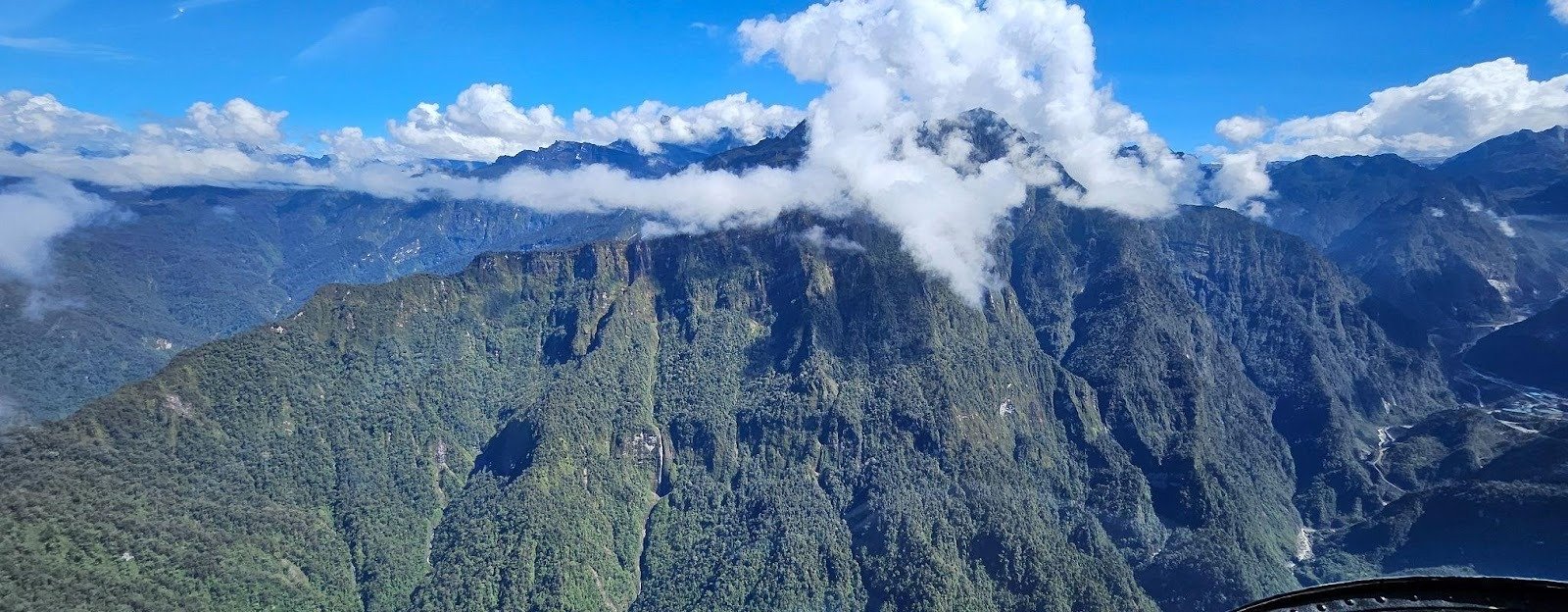
Unlike the northern route, which has now become a popular commercial trail, the eastern route is more influenced by the wild natural conditions of Papua. Wet forests, dense vegetation, deep valleys, and fast-moving fog are part of the core experience of this trail.
For hikers seeking a truly natural route, the East Side offers an experience unavailable on modern trails.
2. Papua Forest: Gateway to the Stone Wall
Before reaching the wall, climbers must pass through the dense Papua forest, one of the richest and most challenging ecosystems in the world. The trail beneath the Eastern Face is never truly dry. Moss-covered ridges and wet roots, slippery ground after rain, and the echoing calls of endemic birds in the distance make every step a mix of awe and caution.
In the morning, fog descends slowly, enveloping the valley and creating an almost mystical atmosphere. However, by midday, the weather can change in a matter of minutes. Papua is unpredictable, and the Eastern Face is the best place to experience this.
At this point, climbers usually begin to understand that this journey is not just a physical climb. It is a process of adapting to nature that cannot be controlled, only respected.
3. Weather: A Short-Lived Ally, a Quickly Arriving Enemy
Carstensz is located in an area with one of the highest rainfall rates in the world. In the eastern part, these conditions are even more extreme because the valleys act like wind and fog funnels. Clear skies at 10 a.m. can turn into a small storm by 10:15 a.m.
It is on this eastern route that climbers must be prepared to face sudden heavy rain, thick fog that hides trails and ravines, cold winds that pierce even in the tropics, and temperatures that drop dramatically as soon as the sun is covered by clouds. It is not surprising that many teams choose to avoid this route. There are only a few windows of good weather that can be exploited, and when the opportunity arises, climbers must move quickly.
4. Slippery Karst and Steep Cliffs: A Test of Mental Strength and Technique
The cliffs of the Eastern Face are not only high, but also slippery due to constant rainfall and a thin layer of moss covering them. The limestone character of this area makes it fragile in some places and very sharp in others. This is not a cliff where climbers can rely on courage alone; they must master basic climbing techniques, balance, and the ability to read the rock.
There are several obstacles climbers must face. First, there is a narrow ridge that has been eroded by rain for decades. There is also a long sloping wall with few comfortable handholds. In addition, the lack of facilities in this natural space requires climbers to move horizontally over open voids. Not to mention the wet rocks, which are coated with oil when it rains.
5. A Visual Experience Unavailable from Other Routes
Although challenging, the Eastern Face offers rewards that cannot be seen from other areas of Carstensz. On clear days, climbers can see the deep green valleys of Papua stretching into the distance. Then there is a thin mist floating between the cliffs, creating a dramatic atmosphere. The vast space can also make climbers feel like tiny specks adrift in a primitive world. It is not uncommon for large birds to fly below the climbers’ height, a sight rarely seen from the standard route.
For climbers who love unconventional routes, moments like these make the Eastern Face worth attempting, despite its considerable challenges.
For Those Seeking the Real Carstensz
If you're looking for a safe, comfortable, and well-equipped route, the Eastern Face may not be for you. But if you're seeking a challenging adventure that tests both your physical and mental limits, offers views unmatched by commercial trails, and connects you with the true face of the Papua Mountains, then the eastern side of Carstensz is the place waiting for you.
The question is simple: Are you ready to face the mountain's most honest and wildest side?
