Central Papua, Timika — The Carstensz Pyramid guide training program has once again entered one of its most crucial stages: class evaluation and hands-on practice in ropework, anchor systems, and reinforcement of basic Occupational Health and Safety (OHS). Conducted at the Tsinga training site, this program is designed to ensure that every participant meets international standard competencies before accompanying climbers to Indonesia’s highest summit.
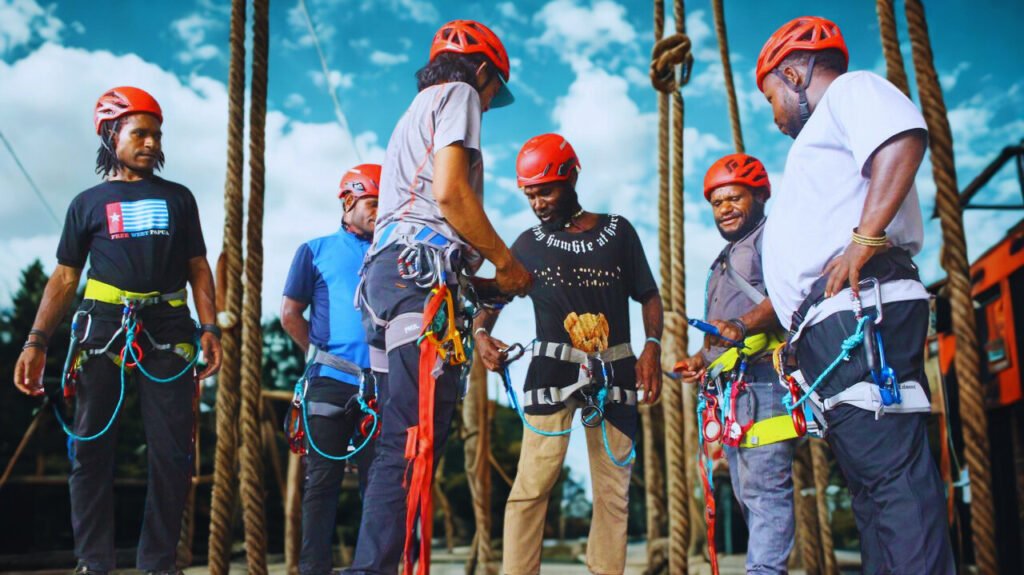
Class Evaluation: Assessing Understanding, Measuring Readiness
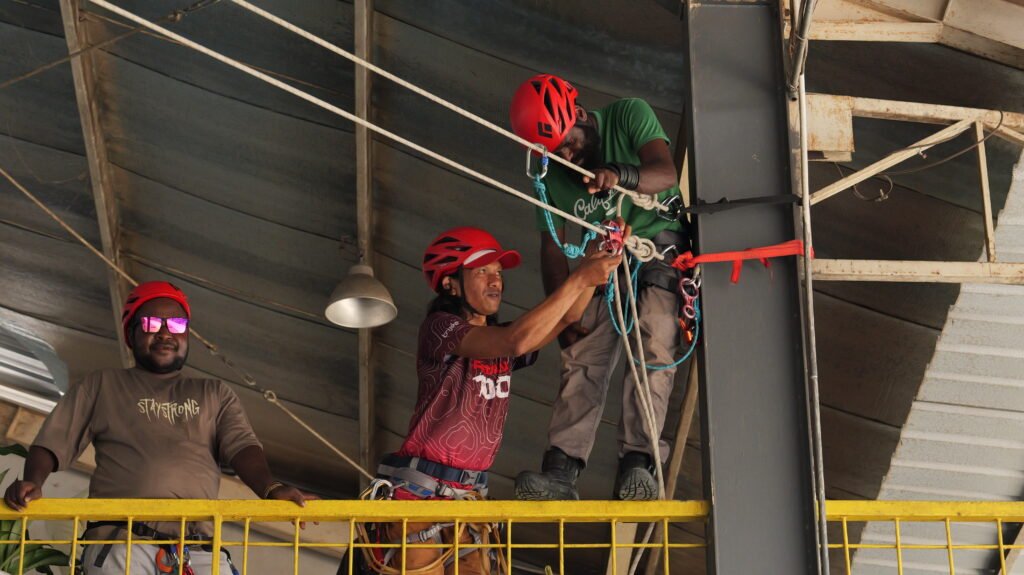
In the morning session, instructors opened the program with a class evaluation. Each participant was required to answer theoretical questions, explain safety procedures, and demonstrate how to inspect personal equipment.
Senior instructor Yafet Waker described the evaluation session as “the main gateway before advanced practice.”
“We want to ensure that participants don’t just memorize theory, but truly understand the risks and how to anticipate them,” he emphasized.
The evaluation covered:
- Hazard identification in mountain terrain
- Proper use of helmets, harnesses, and carabiners
- Team communication techniques on rock and vertical terrain
- General principles of OHS (Occupational Health and Safety) in mountaineering activities
Ropework Practice: The Foundation of a Guide’s Skills
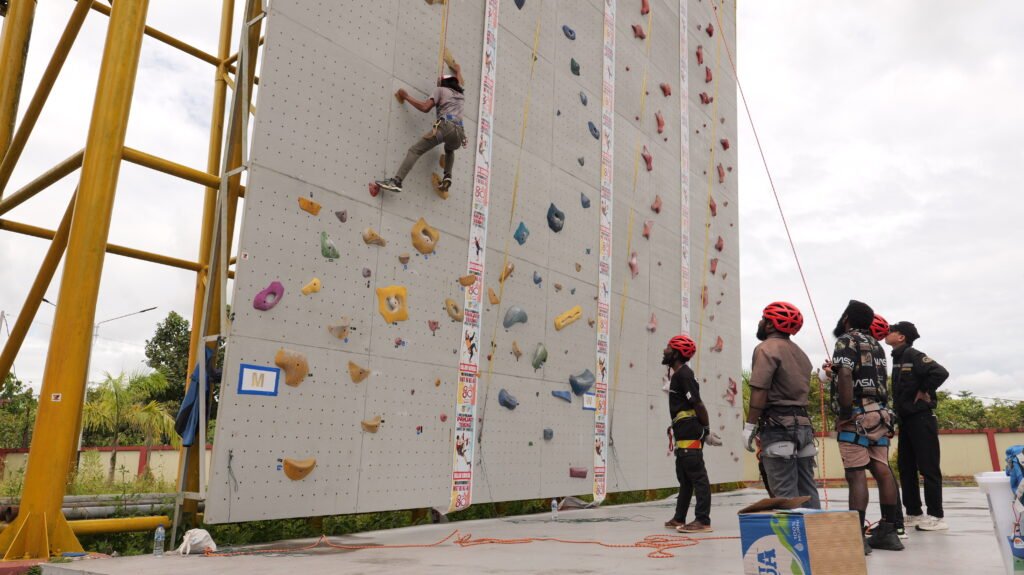
Following the evaluation, participants were directed to the practice area for ropework training—one of the core competencies of a professional guide. Participants learned and practiced various knots commonly used in mountaineering, including:
- Figure-eight knot
- Clove hitch
- Bowline
- Prusik knot
- Double fisherman’s knot
Instructors stressed that even a small mistake in knot tying can be fatal in vertical terrain. Therefore, each participant was required to repeat the exercises until they demonstrated full proficiency.
“A Carstensz guide must be able to tie knots even in rain or darkness. There is no room for error,” Yafet explained.
Anchor Training: Securing Safe Points on the Rock Face
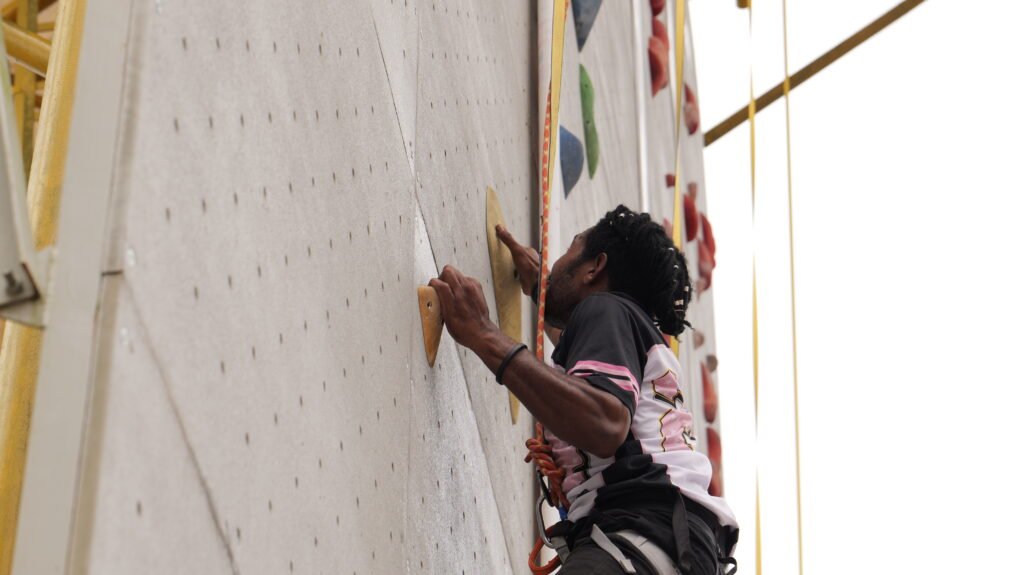
The next session focused on anchor training—the technique of creating secure protection points on rock faces prior to ascending and descending. Participants learned two main types of anchors:
- Natural anchors, utilizing large rocks, trees, or natural rock features
- Artificial anchors, using camming devices, bolts, and nuts
Each participant was tested on selecting strong anchor points, determining proper angles, load distribution, and conducting stability checks. Instructors demonstrated how an improperly placed anchor could fail with a single hard pull, a simulation that reinforced the importance of precision and judgment.
Strengthening OHS Knowledge: Safety as the Top Priority
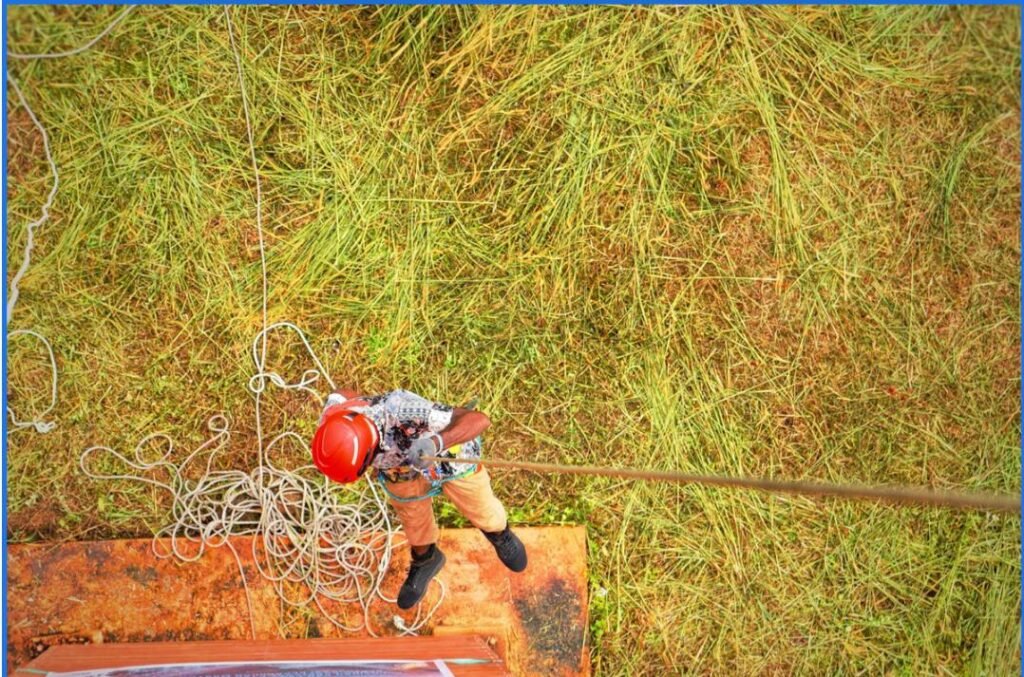
Another equally important component was the reinforcement of basic OHS knowledge. Safety is not merely a set of rules, but a work culture that must be embedded in every guide. Participants received training on:
- Identifying potential hazards at high altitude
- Proper use of Personal Protective Equipment (PPE)
- Risk mitigation systems
- Emergency response and evacuation procedures
- Communication protocols during incidents
OHS instructor Markus Tabuni reminded participants that the Carstensz terrain presents high risks, including sudden storms, rockfall, and hypothermia.
“Without OHS, even the best mountaineering techniques are useless,” he stated.
Commitment to Developing Professional Local Guides
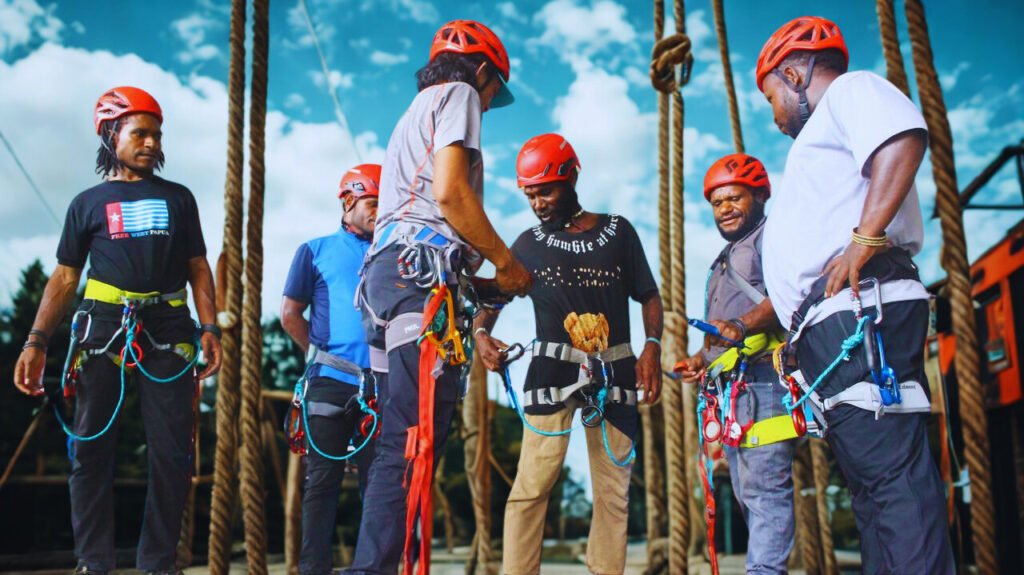
The day concluded with a follow-up evaluation and group discussions. Participants showed strong enthusiasm, actively exchanging feedback and refining their individual techniques.
This training program is a vital part of efforts to strengthen the capacity of local guides from Tsinga, enabling them to compete professionally while ensuring the safety of expeditions to Carstensz Pyramid.
The training will continue with upcoming sessions, including vertical rescue simulations and advanced risk management. (PMA)
