

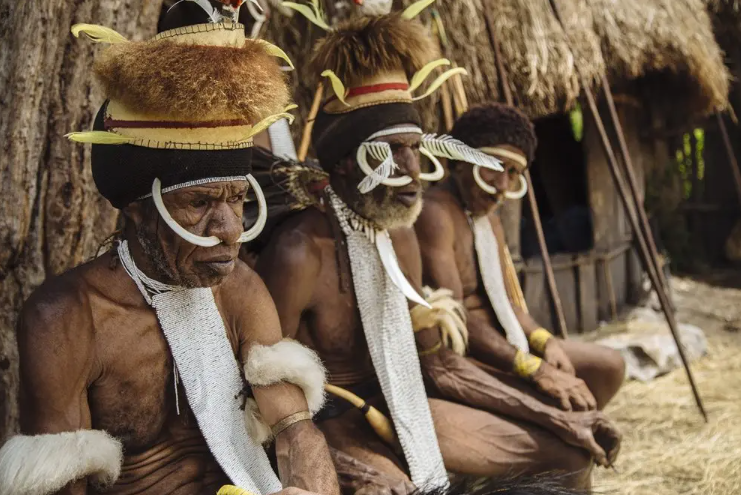
The Dani Tribe: Exploring the Life and Traditions of the Guardians of the Baliem Valley
There is a large valley often referred to as “another world” in Indonesia, located in the middle of the magnificent highlands of Papua. The Baliem Valley is a fertile area surrounded by misty mountains and dense forests at an altitude of almost a thousand meters above sea level. The Dani tribe, a large tribe known for its unique and well-preserved culture, lives here.
The Dani tribe is one of the oldest ethnic groups in Papua. Not only have they lived in the Baliem Valley for hundreds or thousands of years, but they have also preserved many ancestral traditions that are part of their identity to this day. Their existence teaches us many things about humanity’s closeness to nature, cultural resilience, and ways of life that have survived amid global modernization.
History and Origins of the Dani Tribe
The Baliem Valley has been home to the Dani tribe since ancient times. They developed strong social, cultural, and agricultural structures when the mountainous region of Papua was still isolated from the outside world. Their lives are dominated by family relationships and agriculture. The nearby mountains provide natural security from the outside world, while the rich Baliem Valley offers the perfect place for farming.
According to historical records, the Baliem Valley was discovered in 1938 when an American expedition led by
Daily Life: Between Sweet Potatoes, Pigs, and Harmony
If there are two things that are very important to the Dani tribe, they are sweet potatoes and pigs. These two things are not just food, but also symbols of prosperity, family strength, and identity.
Sweet potatoes as a source of life
Sweet potatoes or “hipere” are the staple food of the Dani tribe. They grow it in fields cultivated using traditional techniques passed down from generation to generation. Almost every family has its own garden, and the planting process is carried out collectively—a form of mutual cooperation that strengthens social bonds. In addition, sweet potatoes are also the main ingredient in various rituals and traditional ceremonies. Without sweet potatoes, the life of the Dani tribe would never be the same.
Pigs: symbols of status and honor
For the Dani tribe, pigs are not just livestock. They have very high social and cultural value. In ceremonies such as weddings, peace ceremonies, or funerals, pigs are often used as offerings or symbols of respect.
Owning many pigs means that a person is respected, valued, and considered capable of leadership. Therefore, pigs are well cared for and often treated like family members.
Stone Grilling Tradition: More Than Just Cooking
If there is one tradition that is most famous among the Dani tribe, it is stone grilling. Many tourists come to Papua just to witness this ceremony.
This tradition is carried out for various purposes: to celebrate the harvest, welcome guests, weddings, and even to resolve conflicts between villages. The process involves many people, from gathering wood, heating stones, to cooking together with ingredients such as sweet potatoes, vegetables, and pork.
Deep social meaning
Stone burning is not just about food, but also a symbol of unity. The community gathers, works together, and enjoys the results in one place. This shows how strong the value of togetherness is in the life of the Dani tribe.
The Dani tribe is not just a story from the past. They are a community that lives in harmony with nature, upholds the value of brotherhood, and preserves the traditions inherited from their ancestors.
In the midst of an increasingly modern and fast-paced world, the existence of the Dani tribe serves as a reminder that identity, culture, and togetherness are the most precious treasures. The Baliem Valley is not just a tourist destination, but also a place to learn about resilience, creativity, and a way of life in harmony with nature.
If you have the opportunity to visit Papua, take the time to get to know the Dani tribe up close. You may return home with stories, new insights, and a sense of wonder that is difficult to put into words.
