World’s Tallest Wild Dog Found on the Slopes of Carstensz Pyramid, Papua
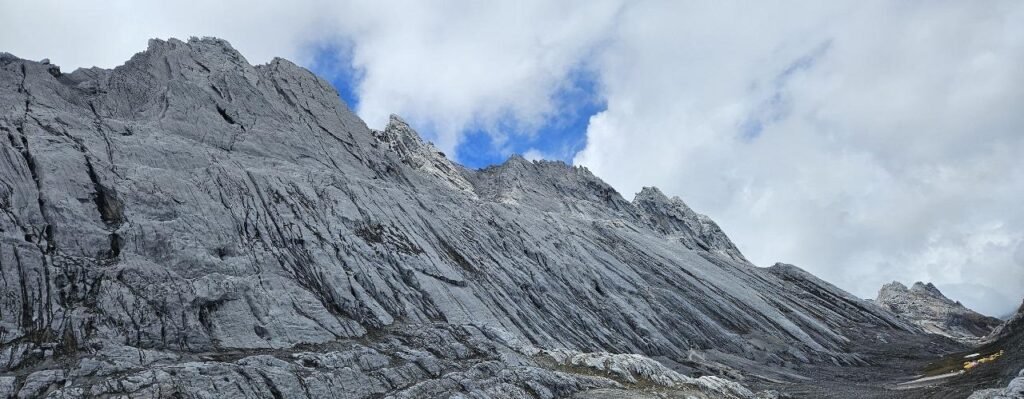
Central Papua — At an altitude of more than 4,000 meters above sea level, right in the Sudirman Mountains region, an international team of scientists has rediscovered a species of wild dog once thought extinct. They live aroundCarstensz Pyramid, which is the highest peak in Indonesia and Oceania, and lives in a very harsh natural environment, can only be visited by experienced climbers.
Research led by James K. McIntyre of the New Guinea Highland Wild Dog Foundation shows that these wild dogs are close relatives of the New Guinea Singing Dog (NGSD), which is one of the rarest dogs in the world.
The results of this study were published in the journal Australian Mammalogy in 2020.
In a ten-day study around the Grasberg mine, just a few kilometers from Puncak Jaya, the research team used camera traps, hair traps, and animal calls. The results were striking: 149 photographs recorded wild dog activity in alpine meadows at elevations of 3,400 to 4,500 meters.
The dogs appeared healthy and active both during the day and at night.
They lived in small groups consisting of males, females, and young. DNA analysis of fecal samples showed a very close genetic relationship to the dingoes of Australia and ancient dogs of Polynesia, suggesting a very ancient origin.
“This is a significant discovery. This wild dog population is not a result of interbreeding with modern dogs, but represents an indigenous Papuan lineage that still survives in the wild,” McIntyre said in his official report.
Between Climbing and Conservation
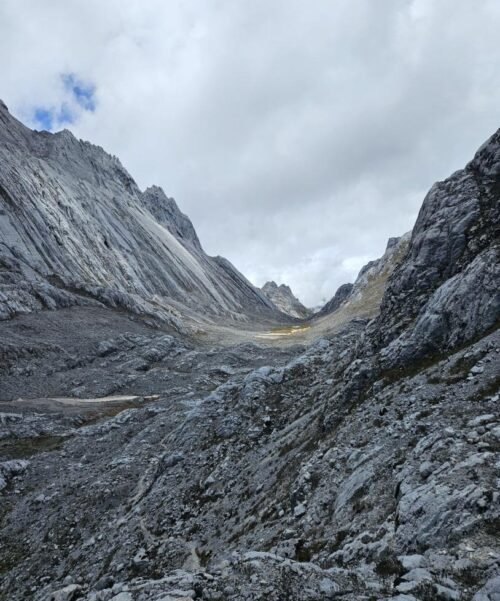
The area around Carstensz Pyramid is one of the most extreme places in Indonesia—night temperatures can drop as low as 2°C, thick fog often descends daily, and the thin air makes breathing difficult. But for these dogs, these conditions feel like home.
They hunt local animals such as cuscus, tree kangaroos, and forest rats, and usually live around rocks, moss, and small lakes in the highlands.
In some cases, they can be heard “singing” — a distinctive high-pitched sound that gives the NGSD breed the nickname singing dog.
For Carstensz Pyramid climbers, this area is known as a highly challenging route—featuring steep cliffs, extreme weather, and a long distance from settlements. However, the route is now also home to endangered species that need to be protected.
Human activities such as large-scale climbing or mining development are feared to disrupt the natural life in the highly vulnerable Papuan highlands.
Experts recommend that the area around Carstensz be maintained and used as a zone for research and conservation of animals that are unique to the area.
The presence of wild dogs in the Papuan highlands is not only a scientific triumph, but also a symbol of wildlife resilience amid the threats of climate change and the loss of tropical glaciers on Puncak Jaya.
“If we lose them, we also lose an important part of the evolutionary history of dogs worldwide,” McIntyre said.
Now, every step a climber takes towards the summit of Carstensz is not just a journey to the heights, but also a journey to explore the ancient story of life that still survives at the edge of the Papuan sky.
